Journal · November 24, 2026
When is the best time to see the northern lights in Iceland?
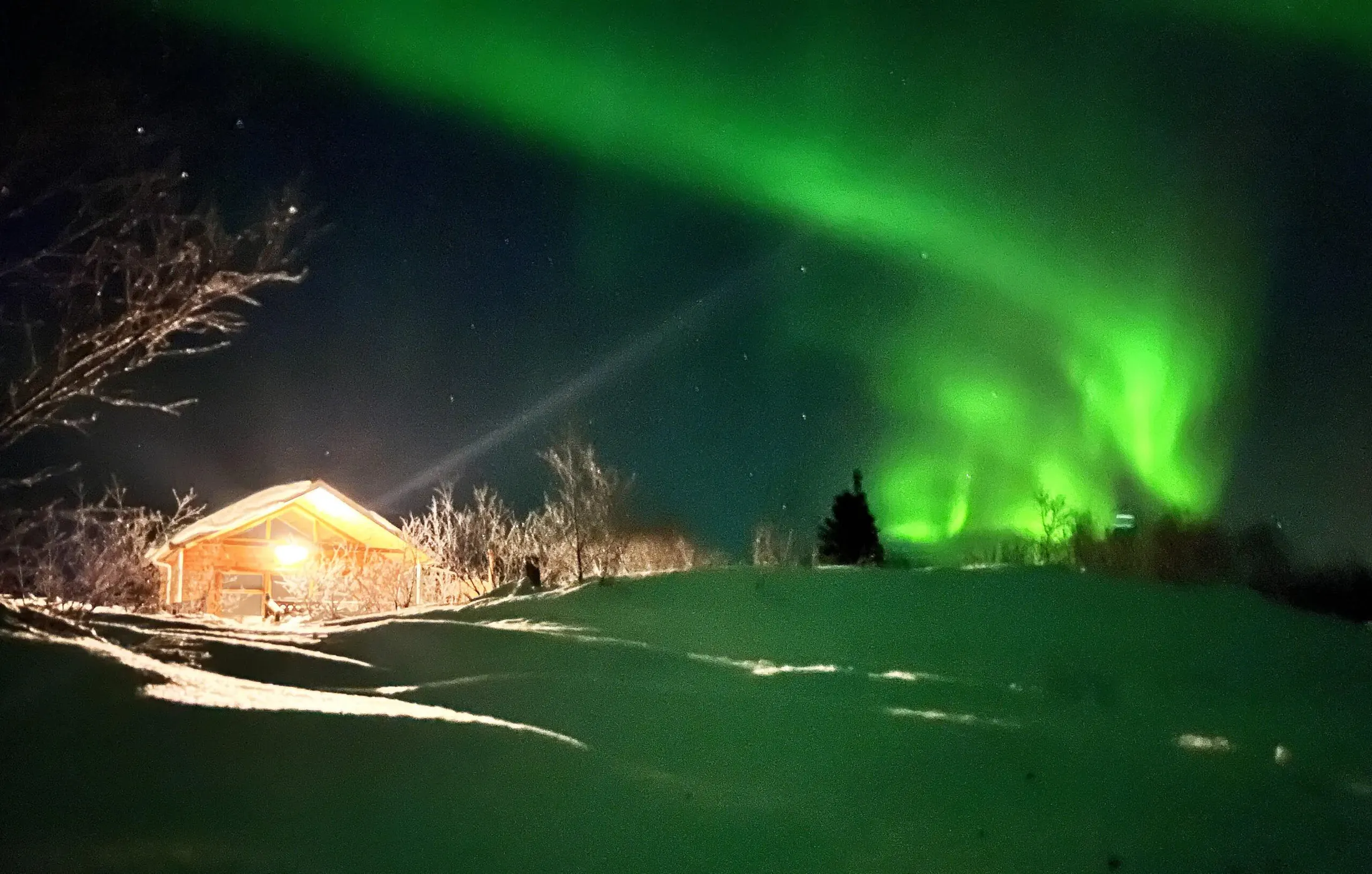
The northern lights (aurora borealis) are one of the main reasons people visit Iceland in winter. They appear when particles from the sun meet the Earth’s atmosphere, and in Iceland you can see them from almost anywhere – if the conditions are right.
The aurora season: September to March
You need darkness to see the northern lights, so the season runs from roughly September to March. From May to early August the nights are too bright, and around midsummer the sun barely sets at all.
Many people like the start and end of the season best. In September, October and March the nights are dark enough, while the days are still long enough to enjoy the landscape.
The best time of night
The aurora can appear any time it is dark, but the most active hours are often between about 9 pm and 2 am. Give your eyes time to adjust to the darkness and be patient: the lights can come and go in waves.
Three things you need
- Darkness. Get away from city lights. A countryside spot like Grímsnes is far better than central Reykjavík.
- Clear skies. Clouds block the view. Check the cloud cover forecast as well as the aurora forecast.
- Solar activity. The Icelandic Met Office (vedur.is) publishes an aurora forecast every day.
Watching from a retreat
At our cabin in Grímsnes the aurora often becomes part of the evening: a fire ceremony under the sky, a quiet meditation on the deck or a soak in the hot tub while the lights move above. No one can guarantee the northern lights, but our 3-day retreats in March, September and October 2027 fall in the aurora season.